
Medical Blog Articles
Explore evidence-based homeopathic insights and articles from our expert practitioners
Doctrine of Homoeopathy: From Vitalism to Healing
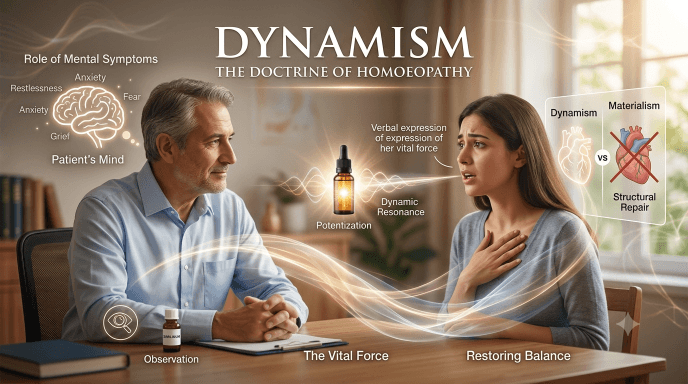
The doctrine of Homoeopathy is inseparably bound with the principle of dynamism. It does not aim at repairing the material body in isolation, but rather seeks to restore the vital force—the dynamic essence that animates life. Disease, in this philosophy, is not merely a structural defect or chemical imbalance; it is a disturbance on the dynamic plane, a disharmony of the spirit‑like energy that governs sensation and function. Homoeopathic medicine, therefore, is not material in its curative action. Prepared through potentization, it transcends crude substance and becomes a dynamic remedy, capable of resonating with the disturbed vital force. Cure is achieved not by suppressing symptoms or altering tissues directly, but by stimulating the inner harmony, allowing the body to reorganize itself from within outward. Thus, the true aim of Homoeopathy is not to treat the corporeal frame, but to re‑establish balance in the living dynamis, from which health naturally flows into the material body.
Surgical Intervention in Homoeopathy: Necessity, Limits, and Integration
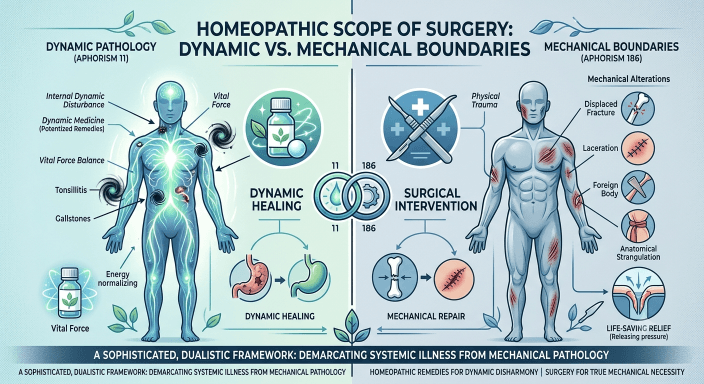
Surgery represents one of the most decisive acts in medical practice—an intervention that seeks immediate relief by removing or altering diseased tissue. Yet, within the philosophy of homoeopathy, surgery is not regarded as a primary mode of cure but rather as a necessary measure when the natural laws of healing cannot be invoked. Homoeopathy emphasizes restoration through the vital force, aiming to correct internal imbalance rather than mechanically excising its manifestations. The scope of surgery in homoeopathy lies in emergencies, irreparable structural damage, or conditions where mechanical obstruction threatens life. Its limitations, however, are evident when surgery is employed as a substitute for true cure, ignoring the deeper dynamic disturbance that gave rise to pathology. Thus, surgery may save life or prevent immediate danger, but it cannot address the underlying susceptibility that homoeopathy seeks to harmonize. In this way, surgery and homoeopathy are not adversaries but complementary disciplines. Surgery provides mechanical aid where necessary, while homoeopathy ensures the restoration of health by addressing the vital force. The ethical challenge lies in discerning when surgical intervention is indispensable and when reliance on the body’s healing potential, guided by homoeopathic remedies, is sufficient.
Healing Injuries through Homoeopathy: From Minor Wounds to Head Trauma
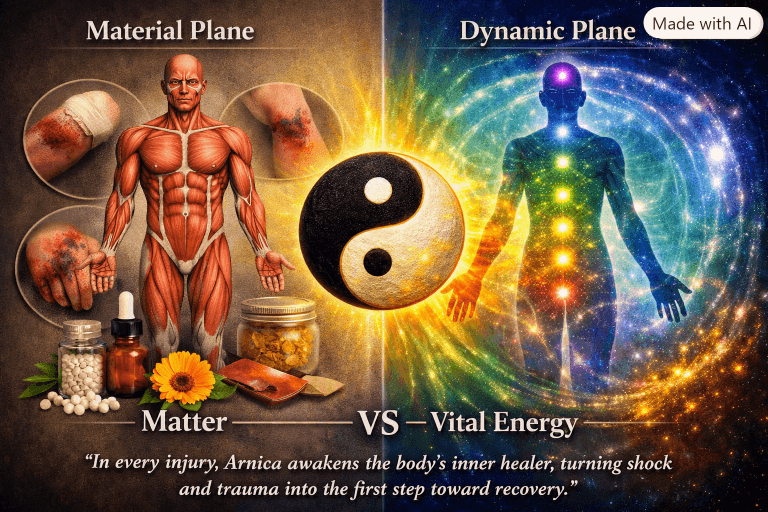
Trauma, whether minor or severe, challenges the body’s natural equilibrium and often leaves both physical and psychological sequelae. Homoeopathy approaches traumatic diseases not merely as mechanical injuries but as disturbances of the vital force, requiring remedies that stimulate the body’s innate healing capacity. the key remedies are Arnica, Ledum, Hypericum, Calendula, Ruta, Bellis perenis, Calc, Rhustox. Trauma, whether minor or severe, challenges the body’s natural equilibrium and often leaves both physical and psychological sequelae. Homoeopathy approaches traumatic diseases not merely as mechanical injuries but as disturbances of the vital force, requiring remedies that stimulate the body’s innate healing capacity.
Diabetes Mellitus: Etiology, Clinical Features, and Homoeopathic Therapeutics.
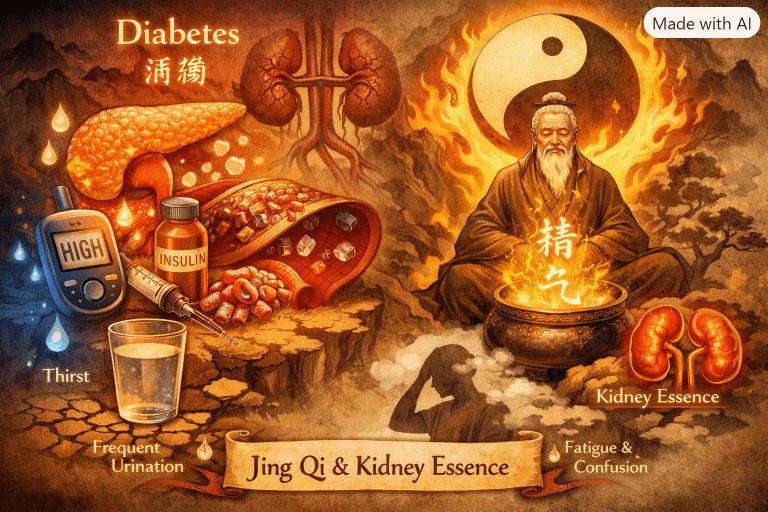
Diabetes mellitus is a chronic metabolic disorder characterized by persistent hyperglycemia and gradual onset of complications such as retinopathy, nephropathy, neuropathy, and ketoacidosis. Despite significant advances in medical science, its exact etiology remains uncertain. Modern research emphasizes the roles of insulin and renal function in maintaining glucose homeostasis, while Traditional Chinese Medicine (TCM) interprets diabetes as a manifestation of Jing (Essence) and Qi deficiency within the genito‑urinary system. In TCM philosophy, Jing represents the balanced integration of Yin and Yang energies, serving as the foundation of vitality, growth, and longevity. Its depletion weakens Kidney Qi, leading to systemic dysfunctions that parallel diabetic manifestations such as fatigue, excessive hunger, and frequent urination. This energetic debility reflects a subtle but crucial link between kidney vitality and metabolic regulation — a concept that resonates with Hahnemann’s homoeopathic view of disease as a disturbance of the vital force. Thus, diabetes mellitus may be understood as both a biochemical disorder and an energetic imbalance, where the decline of Jing‑Qi bridges the physiological and philosophical dimensions of health.

Dr. Constantine Hering: From Surgical Knife to Homoeopathic Light.
Dr. Constantine Hering’s journey into homoeopathy began not with admiration, but with opposition. As a young allopathic physician and surgeon in America, he was commissioned to write against Dr. Samuel Hahnemann and the rising system of homoeopathy. Yet, curiosity led him to experiment, and conviction slowly replaced skepticism. The turning point came during an autopsy when Hering accidentally injured himself with a surgeon’s knife. The wound developed into gangrene, a condition that threatened his life. Conventional methods failed, but the homoeopathic remedy Arsenicum album brought about a remarkable cure. This personal experience transformed his outlook entirely. From an adversary, he became a devoted practitioner, and ultimately one of the greatest pioneers of homoeopathy. His conversion stands as a testament to the power of lived experience in shaping medical philosophy and practice.
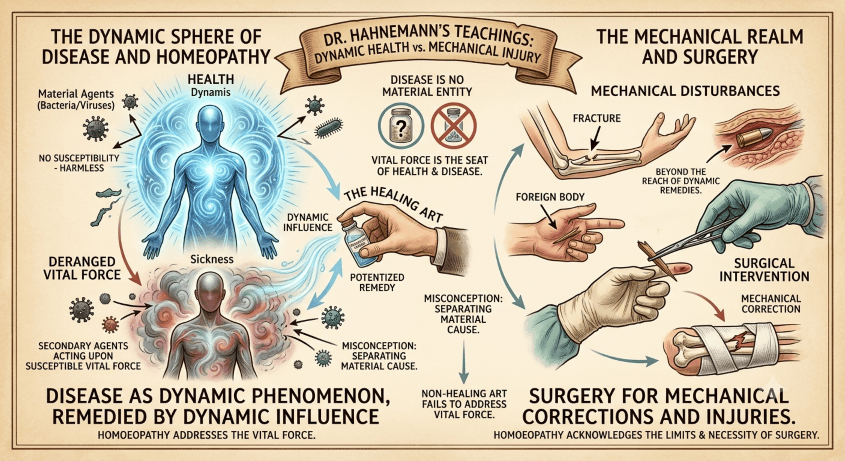
Aphorism - 13, limitation of medicine and scope for surgery in Homoeopathy.
Disease is not a material thing lodged in the body but a dynamic disturbance of the vital force, the invisible principle that sustains life. When this vital force is in harmony, health prevails; when disturbed, it manifests as altered sensations and functions that we call disease. Thus, disease is not a foreign substance but an immaterial imbalance, and cure lies in restoring the vital force to its natural equilibrium.
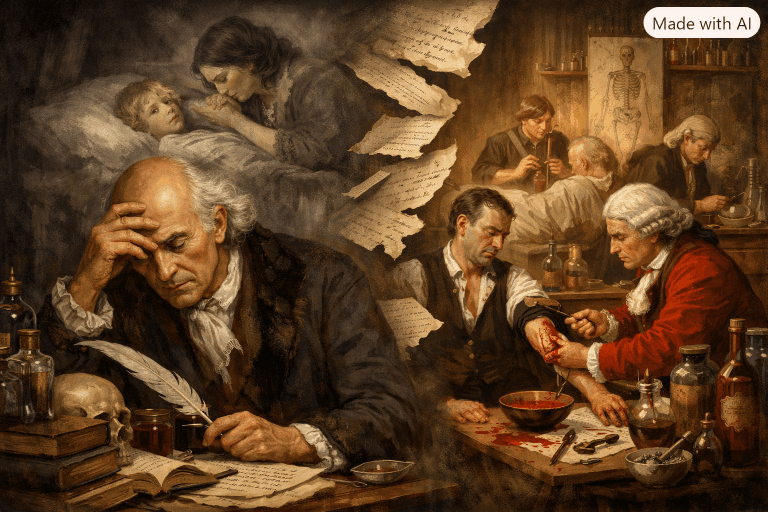
Homoeopathy; Discovery, Principles, and the Divine Gift of Healing
Homoeopathy, discovered at the turn of the 19th century by Dr. Samuel Hahnemann, arose as a revolutionary response to the harsh medical practices of his time. While translating Cullen’s Materia Medica, Hahnemann experimented with cinchona bark and observed that it produced symptoms similar to malaria in a healthy person. This profound insight gave birth to the principle of Similia Similibus Curentur — “like cures like.” The philosophy of Homoeopathy rests on three cardinal pillars: the law of similars, the minimum dose, and potentization. Remedies are prepared through successive dilutions and succussions, transforming crude substances into dynamic medicines that act gently yet powerfully. Unlike conventional medicine, Homoeopathy seeks not to suppress symptoms but to awaken the body’s innate healing force, restoring harmony between mind, body, and spirit. More than a therapeutic system, Homoeopathy is a philosophy of healing — a divine gift that respects nature’s laws and honors the individuality of every patient. Its enduring relevance lies in its holistic vision: to cure without harm, to treat without violence, and to heal by aligning with the wisdom of life itself.
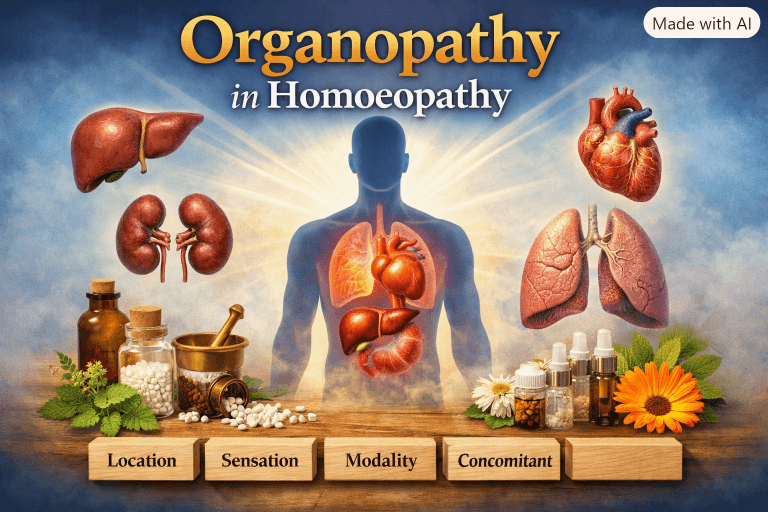
Organopathy in Homoeopathy: Bridging Organ Affinity and Classical Cure.
In the course of homoeopathic practice, many physicians have observed that certain remedies display a marked affinity for particular organs. This organ‑specific action has given rise to the concept of Organopathy, where medicines are employed not merely for their general symptom similarity but for their targeted influence upon vital organs and systems. At first glance, such prescriptions may appear to contradict the fundamental principle of treating the patient rather than the disease. Yet, when examined more closely, they reveal themselves as a natural extension of homoeopathic philosophy. Every medicine, in its proving, demonstrates a distinct relationship to certain tissues or organs, and this affinity cannot be ignored in clinical application. Organopathy, therefore, does not stand apart from homoeopathy but rather complements it, offering a practical method of prescription that emphasizes location and organ involvement while remaining grounded in the totality of symptoms. It is a refinement of practice, reminding us that the organ is not the disease itself but the stage upon which the disturbance of the vital force manifests.

Influenza as an Epidemic Disease: Cough, Cardiac, and Renal Sequelae in the 2026 Outbreak.
Influenza, distinct from simple coryza, exemplifies the dynamic nature of disease through its highly contagious and epidemic character. Unlike localized ailments, influenza spreads rapidly across populations, exerting a profound impact on society. Its complications extend beyond the acute febrile stage, with post‑influenzas cough being a common sequela. More significantly, influenza may leave deeper imprints on vital organs, manifesting as renal and cardiac involvement in the aftermath of infection. Thus, influenza stands not merely as a transient respiratory illness but as an epidemic disease with wide‑ranging consequences for individual health and collective well‑being.
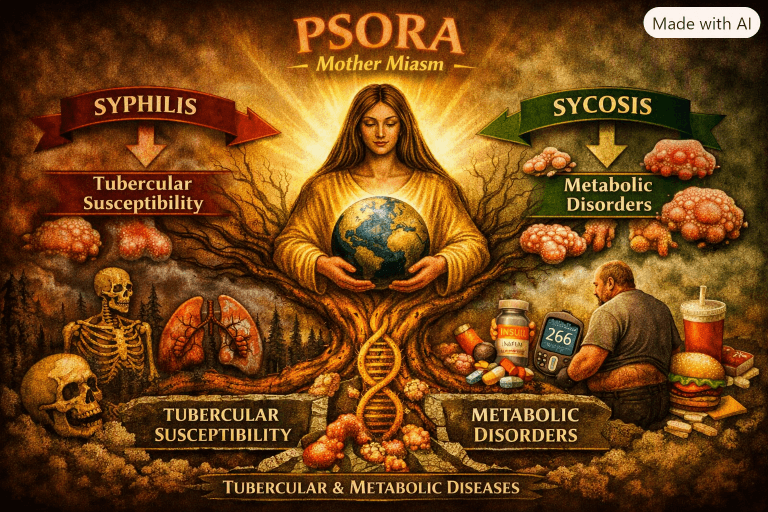
Sycotic Miasm: The Third Pillar in the Triad of Complex Diseases.
The Sycotic miasm, rooted in the gonorrheal taint, represents the principle of excess and infiltration within the chronic disease triad. Unlike Psora, which reflects deficiency, and Syphilis, which embodies destruction, Sycosis manifests through overgrowth, hyperplasia, and hidden accumulation. Clinically, it reveals itself in warty excrescences, fibrous nodules, rheumatic tendencies, and catarrhal discharges. On the mental plane, it is marked by secretiveness, suspicion, and suppressed emotions, mirroring its tendency to conceal within the organism. As the third pillar of Hahnemann’s miasmatic framework, Sycosis completes the understanding of chronic disease by showing how the vital force, when disturbed, may express itself not only through lack or decay but also through pathological excess.
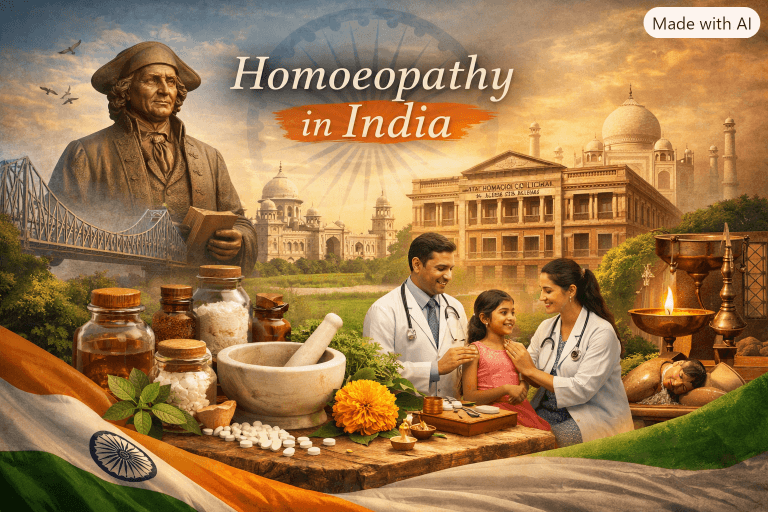
Introduction of Homoeopathy into INDIA: Role of Dr. Honigberger, and other pointer.
Homoeopathy entered India in the early 19th century, finding its first foothold through the remarkable success of Dr. John Martin Honigberger, who treated Maharaja Ranjit Singh in 1839. From Calcutta, the system spread rapidly, winning public trust during epidemics and gaining institutional support. Over time, homoeopathy moved from being a foreign medical curiosity to an officially recognized system under the Government of India, culminating in its inclusion within the AYUSH framework. Today, India stands as one of the largest global centers of homoeopathy, where tradition and modern regulation converge to sustain its growth and relevance.
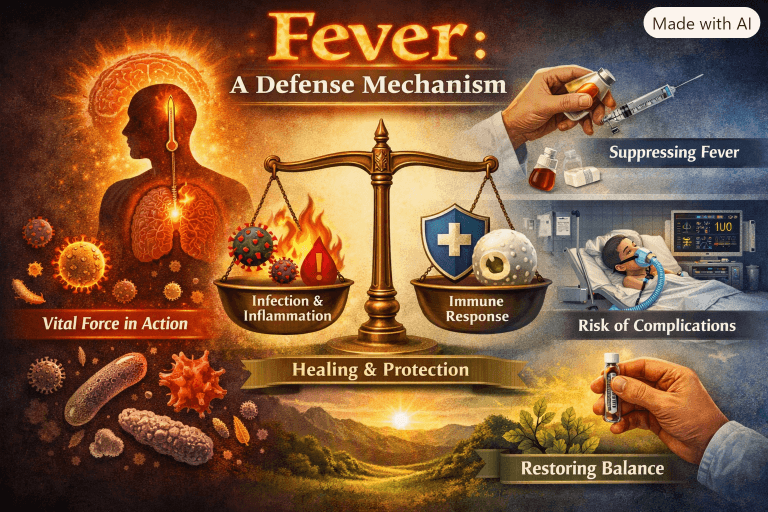
Fever: An Expression of vital force and Dynamic Resonance.
Fever is not just a rise in body temperature. It shows that the body’s inner life force is at work. In homoeopathy, fever is seen as the body’s way of responding and trying to bring itself back into balance. Instead of treating fever as something harmful to be stopped, it can be understood as the body’s way of speaking—showing its effort and strength. Fever activates the body’s defenses, makes us more aware of our condition, and proves that the body can regulate itself. When we see fever as a kind of resonance, we realize it is not random. The heat, restlessness, and changes we feel are part of a natural plan to help healing.
Stay Updated with Latest Research
Get weekly digests of new articles, case studies, and homeopathic insights delivered to your inbox
By subscribing, you agree to our Privacy Policy. Unsubscribe anytime.