
Verified


Exploring vital force through Research, Thermography and Cure.
Discover evidence-based homeopathic insights from leading practitioners
Verified Practitioners
Research-Informed Content
Doctor Review Workflow
Updated Weekly
Knowledge Base
Built for Focused Homeopathic Learning
Explore organized articles, cases, doctors, and practical learning paths.
Curated
Articles
Clinical
Case Studies
Fresh
Updates
Why Choose Us
Everything You Need for Homeopathic Learning
Our platform offers comprehensive resources for both practitioners and patients seeking to understand homeopathic medicine
Holistic Approach
Access comprehensive articles covering mind, body, and spirit healing methodologies
Verified Experts
All content is authored by verified homeopathic practitioners and medical professionals
Case Studies
Learn from real-world cases with detailed treatment protocols and outcomes
Patient-Centric
Resources designed to help both practitioners and patients understand treatments
Always Updated
Stay current with the latest research, remedies, and treatment approaches
Global Community
Connect with practitioners and enthusiasts from around the world
Getting Started
How HomeoEra Works
Join our platform in four simple steps and start your journey into homeopathic knowledge
1
Create Your Account
Sign up as a reader to explore content or as a doctor to start publishing
2
Explore & Learn
Browse through curated articles, case studies, and expert insights
3
Engage & Save
Comment on articles, save favorites, and build your reading list
4
Share Knowledge
Doctors can publish articles and case studies to help the community
Topics
Browse by Category
Explore articles across various medical specialties
Acute Emergency Allergic diseasesBones & joints diseasesChronic DiseasesChronic Kidney diseaseDigestive HealthEndocrine disordersEpidemic diseaseGastro-intestinal disorderGeneral HomeopathyHeadache & DisorderHistory & eventsHomeopathic MedicineHomoeopaty & CancerMental HealthMetabolic disorder Organon & PhilosophyPediatric CasesPyogenic diseasesRespiratory disorderView All
Real Cases
Clinical Case Studies
Learn from documented treatment success stories
Gastro-intestinal disorder
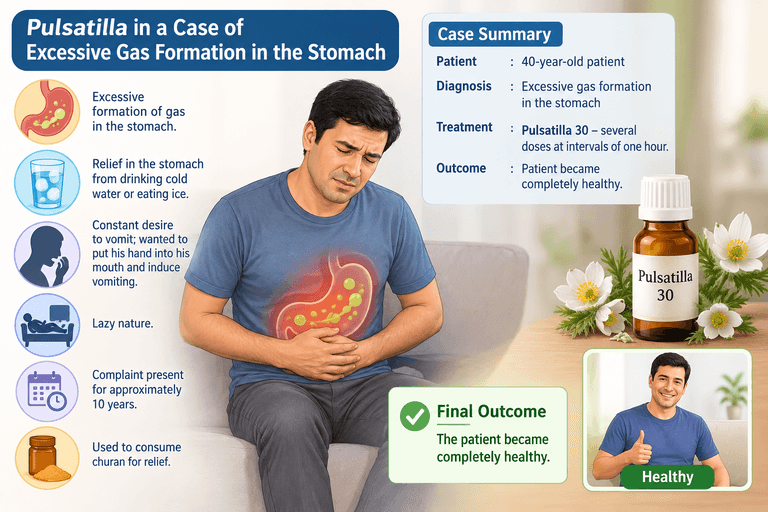
Pulsatilla in a Case of Excessive Gas Formation in the Stomach
Generally, it is believed that Pulsatilla is only a medicine for women. However, this is a common misconception. It is true that Pulsatilla has provided relief to many women, and it suits complaints occurring in women that are aggravated by pregnancy. Yet, its therapeutic sphere is not confined to female constitutions alone. The remedy acts universally, provided the prescription is guided by the totality of symptoms rather than by gender stereotypes
AAdmin User
3m205
Gastro-intestinal disorder
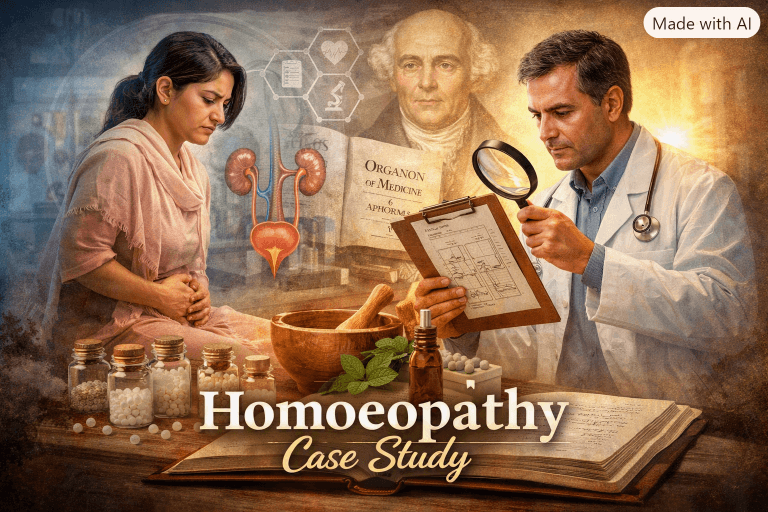
Aphorism 6 in Practice: The Physician Beyond Prejudice.
A 40‑year‑old female presented with a constellation of chronic complaints reflecting both physical discomfort and constitutional imbalance. Urinary symptoms were marked by interrupted, scanty flow with burning, temporarily relieved by local oiling. Abdominal tympanites with frequent eructations failed to provide relief, while general soreness, laziness, and constipation added to her burden. Hair fall was noted, along with numbness and restlessness in the extremities (ameliorated by cold drinks), weakness and pain in the lower limbs, and monthly headaches beginning at the nape and settling at the vertex. Medical history revealed a tendency toward typhoid fever. Generalities included alternating sleep, diminished appetite and thirst, craving for salt, aggravation from food, and sensitivity to both heat and cold. The peculiar modalities — relief by oiling and cold drinks — provided key individualizing features for remedy selection.
AAdmin User
4m174
Acute Emergency
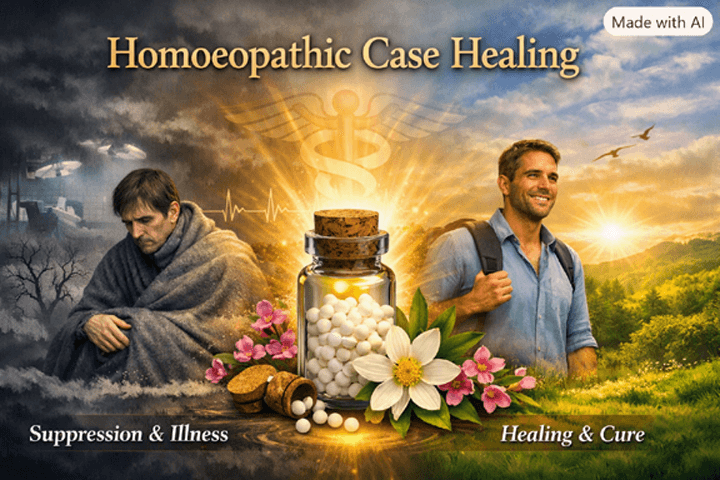
Unexpected Haemorrhage, Unexpected Cure: Mezereum’s Swift Action.
A male patient presented in a state of almost collapse, with profuse rectal haemorrhage of unknown origin. His appearance was almost cadaveric, with pallor and weakness so profound that life seemed to be ebbing away. Conventional measures offered no relief, and the urgency of the situation demanded immediate intervention. Mezereum was selected on the basis of its characteristic affinity for mucosal haemorrhage and profound exhaustion. A single dose was administered. Within minutes, the bleeding ceased entirely, and the patient’s vitality began to return. The rapidity of the response was striking: from a state resembling near‑death, the patient revived, stabilized, and recovered without further recurrence. This case illustrates the remarkable power of the similimum, where one well‑chosen dose of Mezereum transformed a desperate situation into complete restoration.
HHabib khan
4m272
Our Experts
Meet Our Top Contributors
Learn from the best homeopathic practitioners
H
Habib khan
Deals with Chronic diseases
Dr. Habib khan practising Homoeopathy in Gwalior last from 25 years. He is a single remedy Practicnor. trusted by Thousand. Clinic address: 203 cosmo business, park, new city centre Gwalior,
25 articles
A
Afzal khan
Homoeopathic Physician
Dr. Afzal khan Practicing Homoeopathy in Guna (M.P.) last from 12 years, He is eminent Homoeopathic Physician, cares particularly of Kidney patient.
4 articles
A
Ani Arya
classical homoeopathy
I am a classical homoeopath ,practising from last 12 years.I am still learning to become a good homoeopath to serve my nation with the best..... Miles to go before i sleep
1 articles
Fresh Content
Latest Articles
Fresh insights from our medical community
Organon & Philosophy
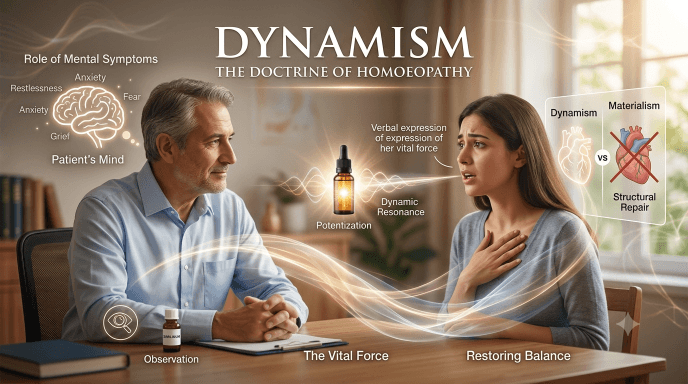
Doctrine of Homoeopathy: From Vitalism to Healing
The doctrine of Homoeopathy is inseparably bound with the principle of dynamism. It does not aim at repairing the material body in isolation, but rather seeks to restore the vital force—the dynamic essence that animates life. Disease, in this philosophy, is not merely a structural defect or chemical imbalance; it is a disturbance on the dynamic plane, a disharmony of the spirit‑like energy that governs sensation and function. Homoeopathic medicine, therefore, is not material in its curative action. Prepared through potentization, it transcends crude substance and becomes a dynamic remedy, capable of resonating with the disturbed vital force. Cure is achieved not by suppressing symptoms or altering tissues directly, but by stimulating the inner harmony, allowing the body to reorganize itself from within outward. Thus, the true aim of Homoeopathy is not to treat the corporeal frame, but to re‑establish balance in the living dynamis, from which health naturally flows into the material body.
AAdmin User
7m219
Gastro-intestinal disorder
Pulsatilla in a Case of Excessive Gas Formation in the Stomach
Generally, it is believed that Pulsatilla is only a medicine for women. However, this is a common misconception. It is true that Pulsatilla has provided relief to many women, and it suits complaints occurring in women that are aggravated by pregnancy. Yet, its therapeutic sphere is not confined to female constitutions alone. The remedy acts universally, provided the prescription is guided by the totality of symptoms rather than by gender stereotypes
AAdmin User
3m205
Organon & Philosophy
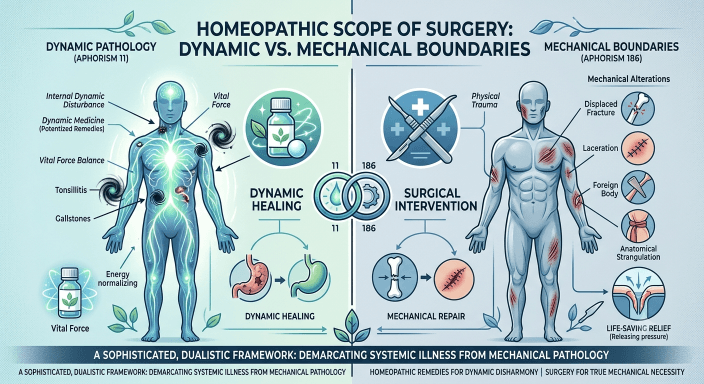
Surgical Intervention in Homoeopathy: Necessity, Limits, and Integration
Surgery represents one of the most decisive acts in medical practice—an intervention that seeks immediate relief by removing or altering diseased tissue. Yet, within the philosophy of homoeopathy, surgery is not regarded as a primary mode of cure but rather as a necessary measure when the natural laws of healing cannot be invoked. Homoeopathy emphasizes restoration through the vital force, aiming to correct internal imbalance rather than mechanically excising its manifestations. The scope of surgery in homoeopathy lies in emergencies, irreparable structural damage, or conditions where mechanical obstruction threatens life. Its limitations, however, are evident when surgery is employed as a substitute for true cure, ignoring the deeper dynamic disturbance that gave rise to pathology. Thus, surgery may save life or prevent immediate danger, but it cannot address the underlying susceptibility that homoeopathy seeks to harmonize. In this way, surgery and homoeopathy are not adversaries but complementary disciplines. Surgery provides mechanical aid where necessary, while homoeopathy ensures the restoration of health by addressing the vital force. The ethical challenge lies in discerning when surgical intervention is indispensable and when reliance on the body’s healing potential, guided by homoeopathic remedies, is sufficient.
AAdmin User
4m174
Traumatic Diseases
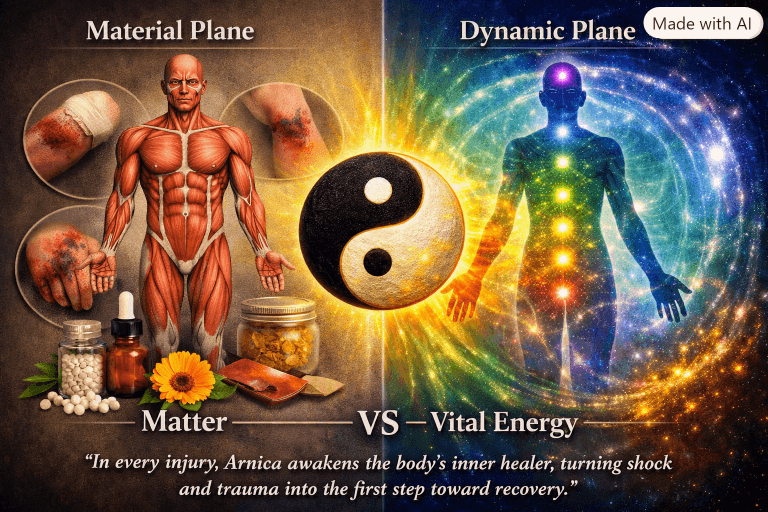
Healing Injuries through Homoeopathy: From Minor Wounds to Head Trauma
Trauma, whether minor or severe, challenges the body’s natural equilibrium and often leaves both physical and psychological sequelae. Homoeopathy approaches traumatic diseases not merely as mechanical injuries but as disturbances of the vital force, requiring remedies that stimulate the body’s innate healing capacity. the key remedies are Arnica, Ledum, Hypericum, Calendula, Ruta, Bellis perenis, Calc, Rhustox. Trauma, whether minor or severe, challenges the body’s natural equilibrium and often leaves both physical and psychological sequelae. Homoeopathy approaches traumatic diseases not merely as mechanical injuries but as disturbances of the vital force, requiring remedies that stimulate the body’s innate healing capacity.
AAfzal khan
6m193
Endocrine disorders
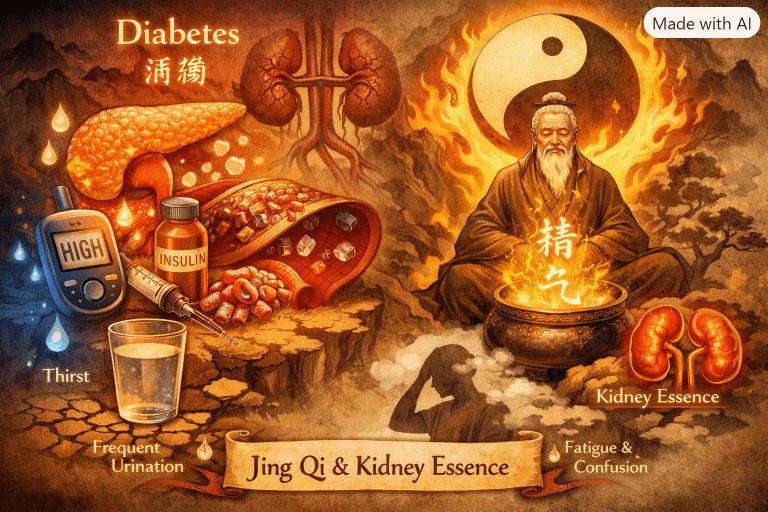
Diabetes Mellitus: Etiology, Clinical Features, and Homoeopathic Therapeutics.
Diabetes mellitus is a chronic metabolic disorder characterized by persistent hyperglycemia and gradual onset of complications such as retinopathy, nephropathy, neuropathy, and ketoacidosis. Despite significant advances in medical science, its exact etiology remains uncertain. Modern research emphasizes the roles of insulin and renal function in maintaining glucose homeostasis, while Traditional Chinese Medicine (TCM) interprets diabetes as a manifestation of Jing (Essence) and Qi deficiency within the genito‑urinary system. In TCM philosophy, Jing represents the balanced integration of Yin and Yang energies, serving as the foundation of vitality, growth, and longevity. Its depletion weakens Kidney Qi, leading to systemic dysfunctions that parallel diabetic manifestations such as fatigue, excessive hunger, and frequent urination. This energetic debility reflects a subtle but crucial link between kidney vitality and metabolic regulation — a concept that resonates with Hahnemann’s homoeopathic view of disease as a disturbance of the vital force. Thus, diabetes mellitus may be understood as both a biochemical disorder and an energetic imbalance, where the decline of Jing‑Qi bridges the physiological and philosophical dimensions of health.
HHabib khan
7m234

History & events
Dr. Constantine Hering: From Surgical Knife to Homoeopathic Light.
Dr. Constantine Hering’s journey into homoeopathy began not with admiration, but with opposition. As a young allopathic physician and surgeon in America, he was commissioned to write against Dr. Samuel Hahnemann and the rising system of homoeopathy. Yet, curiosity led him to experiment, and conviction slowly replaced skepticism. The turning point came during an autopsy when Hering accidentally injured himself with a surgeon’s knife. The wound developed into gangrene, a condition that threatened his life. Conventional methods failed, but the homoeopathic remedy Arsenicum album brought about a remarkable cure. This personal experience transformed his outlook entirely. From an adversary, he became a devoted practitioner, and ultimately one of the greatest pioneers of homoeopathy. His conversion stands as a testament to the power of lived experience in shaping medical philosophy and practice.
AAfzal khan
2m70
Frequently Asked Questions
Everything you need to know before getting started with HomeoEra.
Newsletter
Stay Updated with Latest Research
Get weekly digests of new articles, case studies, and homeopathic insights delivered to your inbox
By subscribing, you agree to our Privacy Policy. Unsubscribe anytime.
Join Today
Ready to Share Your Medical Expertise?
Join our community of homeopathic practitioners and share your knowledge with thousands of readers worldwide. Start making a difference today.
Free to join. No credit card required.
SSL
Secure Access
Admin
Review Tools
SEO
Ready Pages
PWA
Mobile Friendly