
Psoriasis as a Systemic Disease: Insights and Homeopathic Solutions
Psoriasis is more than a skin condition—it is a systemic autoimmune disorder that affects the skin, nails, joints, and overall well‑being. Conventional medicine views it as a chronic, incurable disease that can only be managed symptomatically. Homeopathy, however, offers a holistic approach, emphasizing treatment of the patient rather than isolated body parts. The condition commonly appears on the knees, elbows, scalp, and trunk, but can spread to other areas including the face and nails. Symptoms range from red, scaly patches and cracked skin to joint pain in psoriatic arthritis. Importantly, psoriasis is non‑contagious, though it creates a predisposition in those exposed to psoric tendencies. Homeopathic remedies such as Sulphur, Bryonia, Kalium Bichromicum, Calcarea Carbonica, and Rumex have shown promising results when prescribed according to individual symptoms. Alongside medical care, lifestyle management—balanced nutrition, stress reduction, and avoidance of triggers—plays a vital role in improving quality of life. Psoriasis challenges both body and mind, but with awareness, holistic treatment, and consistent care, patients can live fulfilling lives despite the condition
Admin User
Psoriasis: An Overview
Introduction
Psoriasis is an autoimmune disease that cannot be permanently cured. In the allopathic system of medicine, it is considered a chronic condition that can only be managed symptomatically. Treatment focuses on controlling flare‑ups and reducing discomfort rather than achieving a complete cure.
In contrast, homeopathy offers a different perspective. According to homeopathic principles, there is no need to fear the name of the disease. If a physician carefully records all symptoms and identifies the correct similimum (the most suitable remedy), cure in cases of psoriasis is considered possible. In my own practice, I have witnessed successful outcomes in several cases.
Is Psoriasis Only a Skin Disease?
Psoriasis should not be regarded merely as a skin disorder. It can affect multiple tissues of the body, including hair, nails, bones, and the scalp. Therefore, it is wise for physicians to consider psoriasis as a systemic disease.
Dr. Samuel Hahnemann, the founder of homeopathy, emphasized: “It is the sick subject who requires treatment, not merely his organ or body parts.” This principle reminds us that medicine should be selected for the patient as a whole, not just for isolated symptoms.
Commonly Affected Areas
- Knees
- Elbows
- Scalp
- Trunk
- Lower back
Other regions such as the face, abdomen, genital area, and nails may also be affected.
Types of Psoriasis
There are five major types of psoriasis:
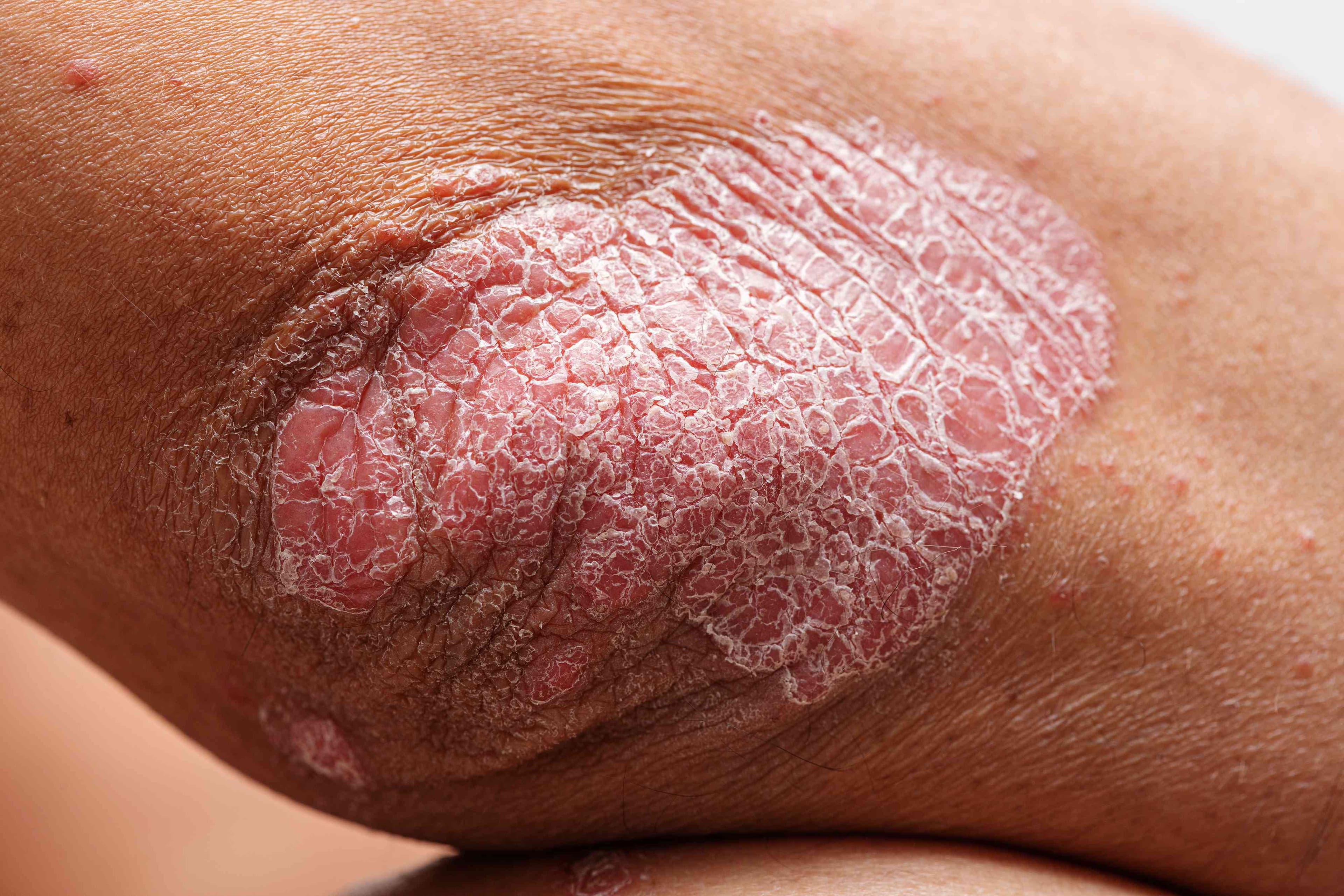
- Plaque Psoriasis – The most common form; raised, red patches covered with silvery‑white scales.
- Guttate Psoriasis – Small, drop‑shaped lesions, often triggered by infections.
- Inverse Psoriasis – Red, shiny lesions in skin folds such as the armpits, groin, and under the breasts.
- Pustular Psoriasis – White pustules (blisters filled with pus) surrounded by inflamed skin.
- Erythrodermic Psoriasis – Severe, widespread redness, scaling, and pain; potentially life‑threatening if untreated.
Symptoms
- Red patches of skin covered with thick scales
- Dry, cracked skin that may bleed
- Itching, burning, or soreness
- Thickened or ridged nails
- Joint pain (psoriatic arthritis in some cases)
Psoriasis is non‑contagious. It does not spread from person to person through touch. However, it may create a psoric predisposition in individuals who remain in close contact with those affected
Living with Psoriasis
Managing psoriasis requires a holistic approach:
- Maintain a healthy lifestyle with balanced nutrition and regular exercise.
- Avoid smoking and excessive alcohol consumption.
- Practice stress‑management techniques such as yoga or meditation.
- Stay consistent with prescribed treatments.
Treatment Options
Allopathic Approach
Conventional medicine focuses on symptomatic relief through topical creams, phototherapy, and systemic drugs. These treatments aim to reduce inflammation and scaling but rarely achieve permanent remission.
Homeopathic Approach
Homeopathy provides hope for patients who feel hopeless with conventional treatment. Remedies are selected based on the totality of symptoms and the patient’s constitution.
Commonly used remedies include:
- Sulphur 200 – A single dose may provide long‑term relief in certain cases.
- Bryonia 1M – Effective when eruptions worsen in winter; often requires only one dose.
- Kalium Bichromicum – Useful for psoriasis that worsens during summer.
- Calcarea Carbonica – Works well after Sulphur, especially when constitutional factors support its use.
- Rumex – Beneficial in cases where Bryonia is insufficient
Topical Care
Topical treatments are generally discouraged in homeopathy. However, if the patient’s skin is excessively dry and uncomfortable, coconut oil may be used as a natural moisturizer.
Lifestyle Management
- Stress reduction
- Healthy diet
- Avoiding known triggers
- Regular moisturizing
Conclusion
Psoriasis is more than just a skin condition—it is a systemic autoimmune disorder that can affect overall health and emotional well‑being. While conventional medicine offers symptomatic management, homeopathy provides a holistic approach that considers the patient as a whole. With proper medical care, lifestyle adjustments, and awareness of triggers, individuals can lead fulfilling lives despite the challenges of psoriasis
About Admin User
HomeoEra: A Global Platform for Doctors Our mission is to build the largest database of homoeopathic knowledge for future generations. With a special focus on teaching Materia Medica and the Organon of Medicine, we aim to strengthen the foundation of classical homoeopathy worldwide. We invite you to share your cured cases on this platform, contribute to collective learning, and support fellow practitioners. Together, let us take a decisive step toward establishing world-class homoeopathy. Join hands with HomeoEra—where knowledge meets cure.
Comments (0)
No comments yet. Be the first to share your thoughts!